2022 SEMA Show to Highlight Vehicle Electrification Trends and Technologies
EV conversions and other trends will be on full display in SEMA Electrified.
The 2022 SEMA Show will feature an expanded SEMA Electrified (booth #11268). Located in the North Hall, the specialized exhibit will showcase the latest advancements in electric vehicle (EV) technology, including new products and solutions for EV platforms and conversions.
“The EV aftermarket is evolving quickly and continues to change; we’re curating a unique collection of the latest products related to electric vehicles and the aftermarket,” said Tom Gattuso, SEMA vice president of events. “SEMA Electrified will help businesses see the latest trends and understand how the EV market has evolved. Visitors will gain an understanding of the advancements and opportunities for the future.”
Although alternative powertrains currently represent just 1% of the 250 million cars, SUVs and light-duty trucks on American roads, sales and interest in EVs are increasing rapidly.
According to recent SEMA Market Research, the electric market includes several areas of opportunity for the specialty aftermarket, including the development of parts and products to aid in the conversion of older internal-combustion vehicles; building and modifying new project, racing and purpose-built vehicles; and expertly accessorizing new OEM electric offerings. SEMA is dedicated to helping its member companies identify those opportunities and adapt to the growing segment of the industry.
While SEMA Electrified will highlight the endless possibilities in the electric market, EV projects and products be displayed throughout the SEMA Show.
Pennzoil to Present “Dare to Perform” Experience at 2022 SEMA Show
The Pennzoil “Dare to Perform” Experience is coming to the 2022 SEMA Show. Get up close and personal with the likes of John Hennessey, Chelsea De Nofa, Rhys Millen and many others. Learn about real-world innovation through industry personalities and automotive builders. Step into Pennzoil’s interactive booth and dare to experience the performance and technology that will spark your passion for the road ahead. Plus, don’t miss the chance for fantastic prizes and giveaways throughout the Show Week and be sure to follow the action using the hashtag #PennzoilAtSEMA. You’ll find all the excitement at the Pennzoil booth #81059. For a full schedule of events, visit www.pennzoil.com/sema.
SEMA Industry Awards to Reflect Contributions of a Growing Community
The SEMA Show Kickoff Breakfast, held Tuesday morning, November 1, before the start of the 2022 SEMA Show, will honor the Best New Products at the SEMA Show and recognize the Manufacturer of the Year and the new Channel Partner of the Year.
Veteran SEMA Show attendees will notice some big updates to the 2022 SEMA Industry Awards.
As e-commerce expands and data-driven transactions become more routine, the SEMA Warehouse Distributor of the Year award has evolved into the new Channel Partner of the Year award. This award honors the contributions of sales, distributors, retailers and e-commerce channel(s) in the industry as well as distribution companies that support retailers.
The Channel Partner of the Year award, along with the Manufacturer of the Year award, will be presented for the first time at the SEMA Show Kickoff Breakfast on Tuesday morning, November 1, before the SEMA Show officially opens. Previously known as the New Products Awards Breakfast, the morning event makes it possible for winners to promote their honors throughout Show Week.
Other industry awards, including the SEMA Person of the Year, and GEN-III Innovator of the Year, and a first-ever Influencer of the Year award will be presented at the Thursday-evening SEMA Show Industry Awards Banquet.
"The SEMA Industry Awards represent the industry, and as the industry evolves, we're pleased to evolve with it," said Chris Standifer, SEMA project manager of recognition programs.
Always a pillar of the SEMA Show, SEMA Education features high-profile experts and industry leaders addressing a diverse range of topics.
Dozens of industry leaders and experts will take the stage at the 2022 SEMA Show Education Program.
Beginning on Monday, October 31, the program will include more than 70 free and premium sessions within 14 tracks. Showgoers may choose individual sessions across different tracks, mixing and matching the offerings for personalized learning that meets their individual needs.
“The Education Program is one of the SEMA Show’s key pillars, and it’s always been highly rated by participants,” said Pamela Brown-Matthis, SEMA director of education. “We challenged ourselves and pushed to make the program better than ever and are bringing in elite subject-experts and high-profile industry
leaders.”
New this year are four sessions focused on challenges and opportunities associated with diversity, equity, and inclusion (DEI) in the workplace. The first DEI session, “Diversity and Inclusion: How You Can Advance Equal Opportunity in Your Workplace,” takes place Tuesday, November 1, and will presented by James Pogue, Ph.D., president & CEO of JP Enterprises. Part of the Business Management Track, each DEI session will feature thought leaders, skill-building seminars, networking, inspiring role models, and action-oriented content.
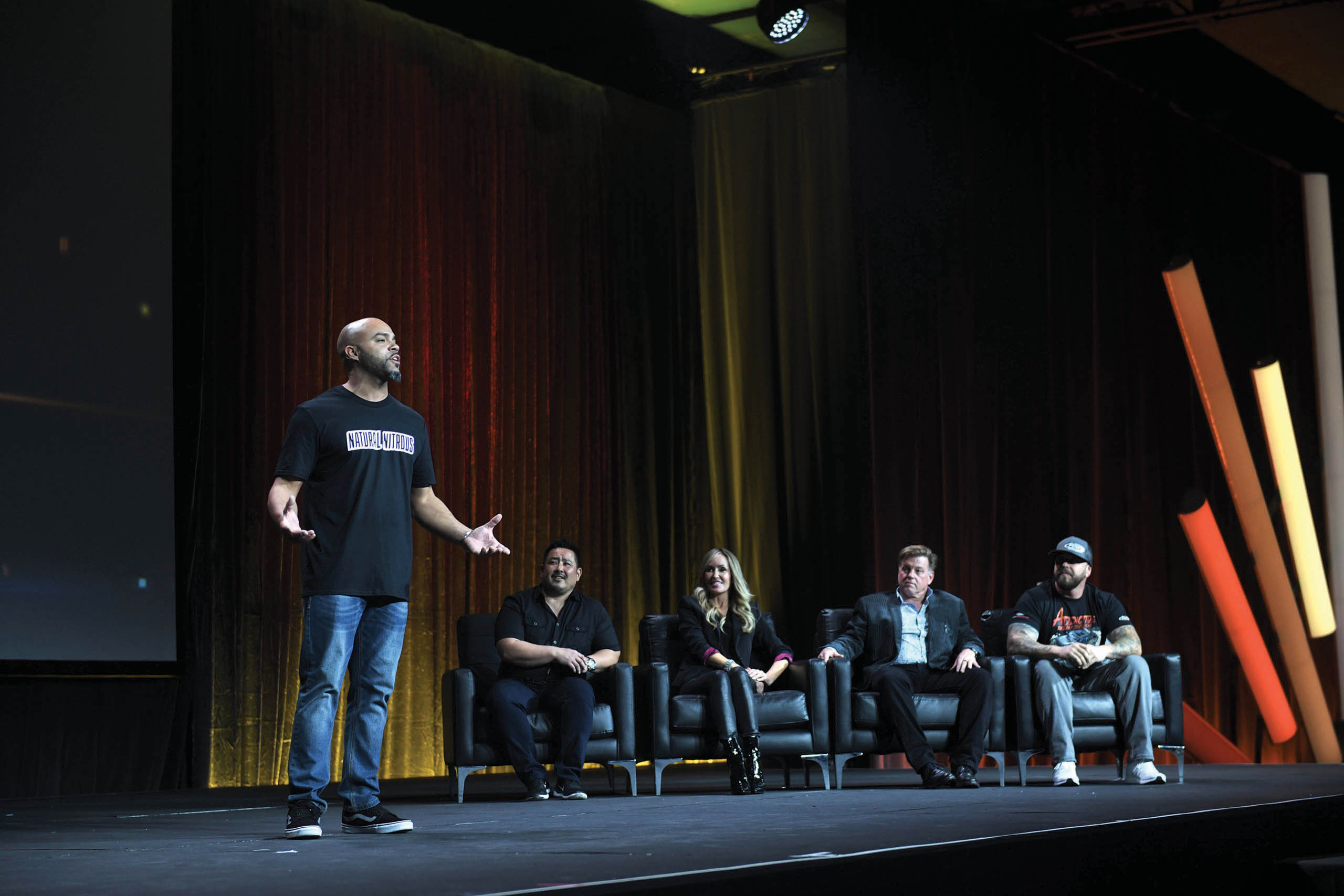
In addition, African American Racers Association Cofounder Chris Harris will moderate “Celebrity Insights.” Featuring automotive celebrities, legends and luminaries with diverse backgrounds and experiences, the one-hour discussion will give attendees a glimpse into the lives of some of their favorite personalities. The session takes place Friday, November 4, along with five other sessions that comprise the brand-new Enthusiast Track program.
Returning by popular demand is the Leadership Essentials Track, presented by Dale Carnegie. Consisting of six courses spread out over three days, the program can be taken as a whole or individually.
Also continuing in 2022 are comprehensive programs from partners, including the Society of Collision Repairers (SCRS), the Inter-Industry Conference on Auto Collision Repair (I-CAR), and the Tire Industry Association (TIA).
Further education information can be found on p. 40. Registrants can sign up for the education program while applying for SEMA Show credentials at
www.SEMAshow.com/registration. Sessions can also be added through the SEMA Show online dashboard or the mobile app.
The stakes will be high at the SEMA Show for emerging entrepreneurs and innovators of new automotive products vying for top honors in the annual SEMA Launch Pad competition.
SEMA Launch Pad is the premier product-pitching competition for budding entrepreneurs in the automotive aftermarket industry. Through the program, selected applicants are hand-picked to receive brand exposure, access to business resources, and the chance to win a grand-prize package valued at $92,000 to launch their product or service into the marketplace.
"The automotive aftermarket is comprised of countless entrepreneurs who are extremely passionate about creating new products and providing solutions for enthusiastic car and truck owners who love to modify, maintain, restore, or personalize their vehicles," said RJ de Vera, SEMA vice president of marketing. "SEMA Launch Pad helps bring these emerging inventors to the forefront, providing a platform for them to potentially take their new creations to the next level."
Fifteen semi-finalists were selected in June to participate in the first round of pitching and be invited to exhibit at the 2022 SEMA Show. From those, the top five finalists will pitch their products to a panel of industry judges during the Show, where a final winner will be selected.
SEMA Launch Pad rules require contestants to be to business owners or company-leading executives (president, CEO, CFO, COO, or VP) over the age of 18. In addition, participants must offer a product or service that is a functioning prototype, functioning concept or currently for sale.
SEMA Garage tech services to members include laser scanning, an OEM-vehicle CAD library, 3-D printing and live measuring sessions of popular new vehicles. These provide member companies of all sizes access to rapid-prototyping tools that can speed product
The New SEMA Garage Detroit Has the Tools to Help Speed Your Products to Market
It's official: The new SEMA Garage Detroit facility opened its doors to the industry on August 18. In reality, the facility had been undergoing a soft launch for several prior months, with different services coming online through the completion of a series of construction phases. Nevertheless, August marked a major milestone in the SEMA Garage's ability to bring cutting-edge research and development programs and technologies to a rapidly changing industry.
"The productivity of the original SEMA Garage in Diamond Bar [California] and the fast pace of automotive technology prompted further investment in our Garage initiatives, and so the SEMA Board of Directors approved a plan to add another SEMA Garage facility in the Detroit area," explained SEMA CEO Mike Spagnola. "What's especially noteworthy is that some 5,000 sq. ft. of the new building will be devoted exclusively to research on advanced driver-assistance systems [ADAS], which is a major priority in our association's drive to make R&D technology accessible to members."
Situated in the Detroit hub, the new Garage offers greater proximity to SEMA members in the Midwest region and creates greater throughput on the emissions-compliance front. It will house equipment that will offer the ability to test both two-wheel-drive and all-wheel-drive vehicles. Since it's located in the same area as many Tier-1 OEM suppliers, the Detroit facility will also offer the long-term opportunity to build and expand on relationships with carmakers and major suppliers, helping to create avenues for collaboration on vehicle personalization.
Tackling ADAS
The collision and repair industry has done much groundwork in properly putting ADAS-equipped vehicles back together. To date, however, no organization has addressed how to make different tires, bumpers, mirrors, grilles, suspensions and other modifications compatible with ADAS features. SEMA's new ADAS Research Center in Detroit aims to fill that void by systematically researching popularly modified vehicles, model by model, and building a library of best practices accessible to all SEMA members.
"It's trailblazing work that needs to be done now, before there are more regulations and obstacles, in order to stay ahead of this fast-moving technology," SEMA Garage General Manager Ben Kaminsky said. To build the ADAS Research Center, SEMA turned to outside industry pioneers in the field.
"They helped us understand what our facilities and systems should be like," Kaminsky explained. "That included everything from light fixtures to wall colors down to not putting metal plates on our outlets because radar can reflect off them. We also had to pay close attention to the flatness and levelness of the floor. We mapped out a grid that told the construction crew almost foot by foot where to grind the concrete to make it level."
The SEMA Garage has also assembled an ongoing ADAS advisory panel to help set research priorities. The panel was key to the selection of a '22 Chevrolet Silverado truck as the first vehicle to study. They were also specific about the vehicle's configuration and trim.
"A lot of our members from around the industry said this was the first vehicle they wanted answers on," Kaminsky said. "It's one of the more popular trucks for consumer modifications. Our Silverado had to have a particular engine configuration, a particular cab configuration and particular ADAS options. Our advisory panel basically steered us in the right direction for that."
The vehicle will now be modified with the panel's input. New wheels, tires and a leveling kit are at the top of the list. As the Garage crew performs each modification, there will be careful study on its effects on ADAS features. Solutions to any problems that arise will be documented to help builders and installers everywhere. Numerous other popular trucks and vehicles will follow.
"The interesting part is that many of our panel members are competitors in the industry, and they're coming together to solve a common problem so they can all have a common footing," Kaminsky noted. "I've been very impressed with how they're working together and how open they've been with information and which vehicle and product configurations sell."
Emissions Compliance
Since the inception of the SEMA Garage, another of its key programs has been assisting members in demonstrating that their performance products meet regulatory emissions-compliance standards and gaining California Air Resources Board (CARB) Executive Orders (EOs) that permit the legal sale of those products.
In February 2022, SEMA added the SEMA Certified-Emissions program, a new way for specialty automotive parts manufacturers to meet the legal requirement for emissions compliance under the U.S. Environmental Protection Agency's (EPA) Tampering Policy. SEMA's certification program enables manufacturers to verify that a product meets the EPA's "reasonable basis" criteria and is therefore legal for sale in 49 states. According to Peter Treydte, SEMA director of emissions compliance, the new Detroit Garage will greatly enhance those services to members.
"We're adding manpower for our Compliance Center, whether that be for assisting with CARB EOs or for SEMA Certified-Emissions services," he explained. "We're also adding another laboratory and two new dynos, which means we'll have more capacity for doing the testing that's necessary."
With the advent of vehicle electrification, the Garage is keeping an eye on the future as well.
"With electric vehicles (EVs), it's not directly emissions testing, but range testing, and range translates into emissions in one form or another," Treydte explained. "There may come a time when evaluating the range of EVs that have been modified would be required, and we'll be able to provide that service as well."
This year’s Show brings electronics geeks a variety of learning opportunities to discover and understand the latest trends affecting their businesses. Below are two seminars that may be of special interest. For information about all the Show’s educational offerings, including how to register, visit www.SEMAShow.com/education.
Gear Up to Be Service-Ready: Preparing for New-Technology Vehicles
Monday, October 31, 9:00 a.m.–10:00 a.m.
Location: N254
As automotive technology becomes ever more sophisticated and complex, it’s crucial for aftermarket businesses to understand and prepare for these new technologies. Learn how to recognize the risks of not being service-ready; how to establish a plan to attract, grow and retain technician talent; and what it takes to create an aftermarket readiness plan that ensures success.
Electric Vehicles: What You Need to Know and How to Prepare Your Shop
Monday, October 31, 1:00 p.m.– 2:00 p.m.
Location: N256
Join I-CAR’s Director of Programs and Services Dirk Fuchs for a close-up look at electric vehicle (EV) technology and the industry best practices developed for disconnecting and reconnecting high-voltage vehicles. Understand how to handle a high-voltage vehicle when it arrives at your repair facility and the key points in the repair process.
The North Hall at the Las Vegas Convention Center will again be the center of activity for the mobile-electronics market at the 2022 SEMA Show. Industry experts expect the sector will see renewed opportunities as the market heads into 2023.
It's no secret that the electronic age has influenced every segment of the automotive aftermarket—and will continue to do so for as far into the future as we can see. Whether it's the adoption of computer-aided design and 3-D printing by builders and fabricators or consumers demanding full integration of their cars and their devices, computer-driven electronics are here to stay. The proliferation of advanced driver-assistance systems across OE vehicle platforms and increased vehicle connectivity with the Internet of Things have created enormous technical and logistical challenges for the aftermarket—and boundless opportunities for entrepreneurs looking to establish a brand presence in a rapidly evolving marketplace.
As a whole, the mobile-electronics industry did not fare well during the initial stages of the COVID-19 pandemic. Severely impacted by COVID-related manufacturing disruptions, the industry took a hard hit, with a 5% decline in sales worldwide in 2020, according to Fortune Business Insights. Still, new players enter the market on a near-weekly basis, and the increase in the number of homebound consumers in search of alternative forms of entertainment during the pandemic provided additional opportunities for recovery and growth. As supply-chain issues are resolved over time, the global automotive electronics market is projected to reach $382 billion by 2026, with a 7.3% compound annual growth rate over the 2020–2026 time period, according to a recent study from Allied Global Insights.
For this article, we consulted more than a dozen industry leaders. What follows is a summation of their insights, edited for clarity and length.
The State of the Market: Healthy, With Headwinds
Overall, our panel of experts agreed that the market has returned to a relatively normal condition, though challenges loom for the near future.
"Challenging, ever-changing and rewarding," said Darryl Miya, brand manager for Scosche Industries. Miya cited inflation, the end of stimulus funding and further COVID disruptions to the supply chain as near-term concerns, adding that "hopefully things will start to smooth out by the third quarter."
"The supply chain is what's hurting most companies, and now it's twice as difficult because of the increase in consumer demand," said Dennis Hopper, executive vice president at VAIS Technology (booth #11345). "COVID shut down workplaces, and people had extra money to spend. That helped feed the extra demand."
Geopolitical unrest is also likely to weigh on the industry for the near term.
"We're a global economy now, so when something happens such as what's going on in Ukraine, it can send everything into a tailspin," said Robin McNeal, national sales manager for Nakamichi Mobile Audio (booth #11517). "For us, Russia is a huge customer, and I suspect that side of the business may soon come to a grinding halt." Still, some companies have managed to weather the storm with continued strong sales.
"Business the last two years has been very strong, with unprecedented growth," said Brian Sherman, vice president of product and marketing for Maxxsonics USA (booths #11214 and #81270). "We feel that it's starting to level off, but we still see certain opportunities for growth."
Major Trends and Developments
The mobile-electronics industry serves a number of diverse customer bases. Not surprisingly, our panel of experts saw growth in different markets.
"A lot of the manufacturers on the mobile side have been turning their attention to the marine and powersports markets," Hopper said. "It seems like just about everyone has product now for side-by-sides. Motorcycle audio has been steady for a few years, and while car audio still exists, the new niche segments such as powersports have been growing the most rapidly."
McNeal also cited the marine market as a strong sales driver: "That's an up-and-coming market for us."
Marine electronics alone comprise a $5.25 billion global market, according to a recent survey from Maximize Market Research Ltd.
"And don't forget golf carts and three wheelers," Hopper continued. "Across the country, you have a lot of gated communities where people drive them all over the place, and some of them have massive audio systems in them."
McNeal saw strong consumer demand for software installations.
"It's all about Apple Car Play and Android Auto—and, of course, those are the two biggest users of the microchips that everyone's struggling to get," he said. "Now, unless you're just looking to fill a hole in your dash, that's what everyone is after. With the cost of new and used vehicles so high, people are holding onto their vehicles longer, and eventually they'll want to bring that new technology into the current vehicle."
Sherman pointed to the powersports market as a rapidly expanding sector, and to increasing consumer interest in high-powered, high-end mobile audio systems. But Sherman and McNeal both pointed to a shortage of skilled labor as an issue that has forced the market to adapt.
"The complexity of new vehicles and access to a pool of qualified installers has certainly presented challenges," Sherman said. "We've responded by developing products that are easier to install for people with even basic mechanical knowledge. Products like our MB Quart Jeep audio kits are just one example."
The pandemic and its related disruptions forced many companies to ramp up their investments in digital marketing and social media in particular.
"We've always been very pro-digital," Hopper said. "We have a very active Facebook page with a lot of users, and we do our own email blasts based off information we capture from dealers that buy from us. Add Google SEO, and that would be the top three digital marketing platforms for us."
Sherman said that social media is a key part of his company's marketing strategy.
"It still represents the most cost-effective and efficient way to get info on new products out to our distributors, dealers and consumers," he said.
A mobile-friendly website that's capable of conducting transactions is an increasingly important tool in the digital toolbox as well.
"Purchases made from smartphones increase each year," Miya noted.
It's been said that knowledge is power, which is why SEMA, as a trade association, has long been committed to specialized education tailored to empower success in the aftermarket industry.
The annual SEMA Show, when industry professionals gather under one roof, provides a convenient and efficient opportunity for industry professionals to accelerate their professional development. The 2022 educational lineup includes something for everyone, allowing attendees to customize their own plan for advancement.
Notable opportunities include a six-part series delivered by proven Dale Carnegie executive coaches. These 90-min., interactive workshop-style sessions are designed to enhance leadership skills. For marketers, there will be 11 sessions examining the latest digital marketing trends and how to leverage top social-media platforms to drive market share and revenue growth.
Six free sessions on Friday—the Enthusiast Track—will be delivered by industry legends and celebrities who will share insights about the car-building business, how to attract sponsors, and the implications of regulatory activity that will affect business opportunities.
An important addition at this year's 2022 SEMA Show will be four new offerings on the topic of diversity, equity and inclusion. Attendees will be able to attend skill-building seminars and network with role models who have forged pathways
to success.
A number of specialized technical sessions are available, including many aimed at addressing issues faced in today's collision-repair businesses. Those hosted by the Society of Collision Repair Specialists (SCRS, booth #31147) feature renowned industry experts who will clarify the challenges the repair industry faces and share implementable solutions. And the Inter-Industry Conference on Auto Collision Repair (I-CAR, booth #33139) training series includes a MIG-welding classroom and hands-on demos sessions for collision repairers and builders/rebuilders.
For wheel and tire professionals, the Tire Industry Association's (booths #40067 and #41067) educational track focuses on tire and TPMS issues that must be addressed in the shop, plus management issues related to the best practices in operation, marketing and risk management.
And a series of three sessions on the topic of emerging vehicle technologies—such as advanced driver-assistance systems (ADAS), electric and autonomous vehicles—will reveal how leading experts address some of the industry's top tech challenges, plus techniques that shop owners and technicians can apply.
Also new this year, the SEMA Show 2022 "Main Stage Experience" features iconic personalities in the automotive industry—car enthusiasts, thought leaders, innovators, entertainers and world-renowned leaders bringing fresh perspectives and innovative ideas to help elevate and inspire new approaches. It's a segment that promises an unforgettable immersive learning experience.
Show attendees can develop their own educational schedule by visiting www.sema.org and pulling down the "Education" tab. Participation will be an investment in knowledge and skill-building, one that pays guaranteed interest to your personal bottom line.
Hot Rod Industry Alliance Set to Shine at the SEMA Show
The HRIA Industry Salute at the 2022 SEMA Show will begin with the traditional trooping of the colors, Wednesday, November 2, at 5:30 p.m.
After scratching plans to host networking events earlier this year, the Hot Rod Industry Alliance (HRIA) scored a win at Back to the Fifties and is prepping for the SEMA Show.
"Our Back to the Fifties mixer was one of our most successful events," said HRIA Chair Danny Agosta of Steele Rubber Products (booth #22587). He credited the impressive turnout to a test-pilot marketing campaign that included a personalized invitation video emailed to contacts and a setup day walkaround to invite exhibitors.
"It was a great opportunity to meet new people and get qualified leads," said Agosta. "The pilot was so successful we plan to adopt the format for the HRIA Reception at the Show."
Industry Salute
HRIA pulls out all the stops at its annual awards reception. Held on Wednesday, November 2, 5:30 p.m.–8:30 p.m., the event raises money for the SEMA Memorial Scholarship Fund through table sponsorships.
The evening begins with an honor guard trooping of the colors and the national anthem. As guests enjoy snacks and beverages and view the hot rods on display, emcee Tim Strange, Strange Motion, will introduce award honorees.
Categories include Hall of Fame, Industry Recognition Award, Business of the Year and Chairman's Award. Two new awards are on tap, one for vehicle design and innovation, and another recognizing the evolution of the hot rod.
"This event is a celebration of the hot-rod industry and the people and businesses that contribute to its growth and success," said Agosta.
Catch the Action
Hot rods are also front and center in the exhibit space shared with the Automotive Restoration Market Organization (ARMO). The Central Hall display, booth #23295, features six vehicles, three from each council. One hot rod will be unveiled on opening day.
The display helps to promote awareness of the hobby. It also elevates the builders' profiles and spotlights the member exhibitors whose products are featured on the vehicles. "The vehicles exemplify the amazing work of our member builders, historically, some of the best in the Show," said Agosta.